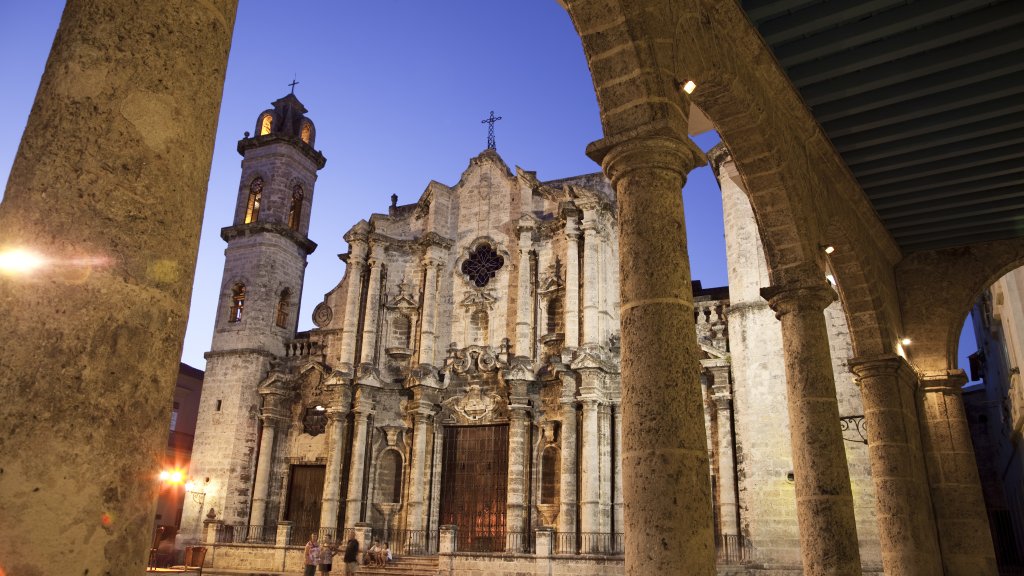
UNESCO Site, Cathedral de San Cristobal, Havana, Cuba
Sign in to add this photo to your favorites and desktop wallpaper rotation.
The Cathedral de San Cristóbal, located in Havana, Cuba, is a prominent example of Cuban Baroque architecture and is part of the UNESCO World Heritage Site known as "Old Havana and its Fortification System." This designation was granted in 1982 due to the area's historical significance and well-preserved colonial architecture. The cathedral, officially named the Cathedral of the Virgin Mary of the Immaculate Conception, is situated in the Plaza de la Catedral, one of the five main squares in Old Havana. Construction of the cathedral began in 1748 and was completed in 1777. It was originally built by the Jesuits, but after their expulsion from Cuba in 1767, the building was handed over to the Roman Catholic Church. The architectural style of the cathedral is characterized by its asymmetrical facade, which is a hallmark of the Cuban Baroque style. The two bell towers are of different sizes, adding to the unique aesthetic of the building. The interior is more restrained compared to the ornate exterior, featuring a simple yet elegant design with a vaulted ceiling and several chapels. The Cathedral de San Cristóbal is not only a place of worship but also a significant cultural and historical landmark. It is said to have housed the remains of Christopher Columbus from 1796 to 1898 before they were moved to Seville, Spain. The cathedral remains an active place of worship and a popular tourist attraction, drawing visitors who are interested in its architectural beauty and historical importance.