Tristan da Cunha
Sign in to add this photo to your favorites and desktop wallpaper rotation.
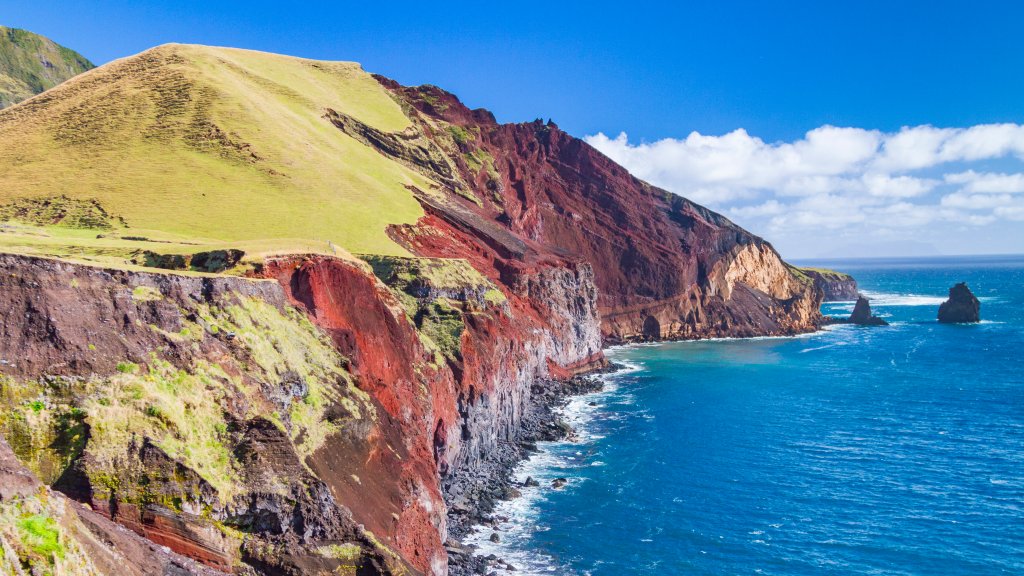
Tristan da Cunha is a remote group of volcanic islands in the South Atlantic Ocean. It is part of the British Overseas Territory of Saint Helena, Ascension, and Tristan da Cunha. The main island, also called Tristan da Cunha, is known for being one of the most isolated inhabited islands in the world. The nearest inhabited land is Saint Helena, which is about 2,400 kilometers (1,500 miles) away, and the nearest continental land is South Africa, about 2,800 kilometers (1,750 miles) to the east. The island was first discovered in 1506 by the Portuguese explorer Tristão da Cunha, after whom it is named. However, it was not settled until the early 19th century. The population is small, with fewer than 300 residents, most of whom live in the settlement of Edinburgh of the Seven Seas. The community is largely self-sufficient, relying on agriculture, fishing, and limited tourism. Tristan da Cunha has a rugged landscape dominated by its central volcanic peak, Queen Mary's Peak, which rises to 2,062 meters (6,765 feet) above sea level. The island's climate is maritime, with mild temperatures and high humidity, and it is often subject to strong winds and heavy rainfall. Due to its isolation, Tristan da Cunha has a unique ecosystem with several endemic species of plants and animals. The island is also an important breeding site for various seabirds. Conservation efforts are in place to protect its natural environment. Access to Tristan da Cunha is limited, with no airport on the island. Travel is typically by ship, with infrequent voyages from South Africa. This remoteness contributes to the island's unique way of life and cultural heritage.