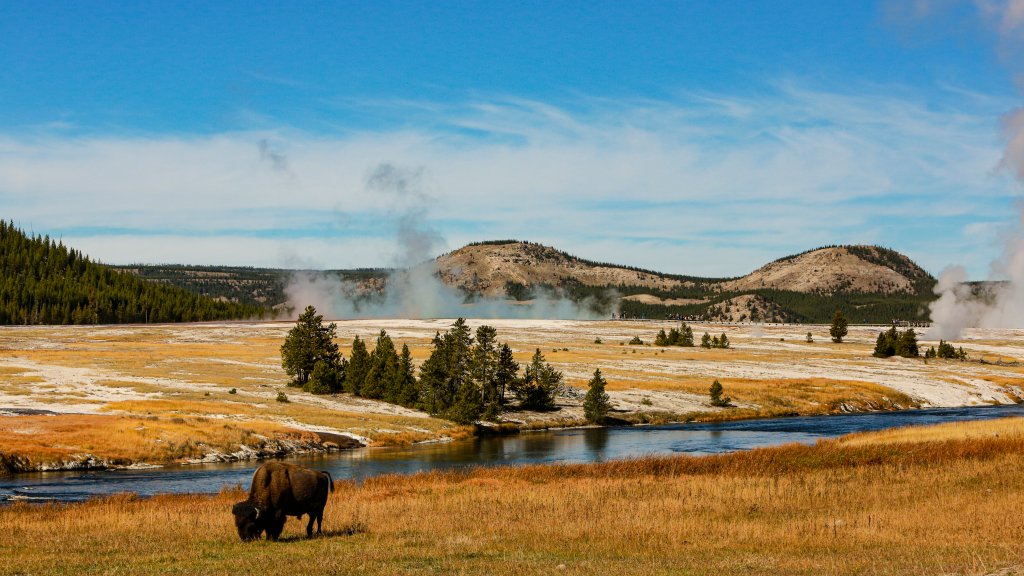
Bison, Yellowstone National Park, WY
Sign in to add this photo to your favorites and desktop wallpaper rotation.
Bison, also known as American buffalo, are one of the most iconic and significant animals found in Yellowstone National Park. These majestic creatures are a symbol of the American West and have a long history in the region. Yellowstone is home to the largest and most genetically pure population of free-roaming bison in the United States. Bison in Yellowstone are known for their massive size, with males (bulls) weighing up to 2,000 pounds and females (cows) around 1,000 pounds. They have a distinctive hump over their shoulders, a large head, and a thick, shaggy coat that helps them endure the harsh winters of the park. The bison population in Yellowstone is unique because it is one of the few that has continuously lived in the same area since prehistoric times. This population is considered genetically important because it has not been significantly altered by interbreeding with cattle, unlike many other bison herds. Bison play a crucial ecological role in Yellowstone. They are grazers, feeding primarily on grasses and sedges, which helps maintain the grassland ecosystem. Their grazing patterns can influence plant community dynamics and help create habitats for other species. Visitors to Yellowstone often have the opportunity to observe bison in their natural habitat. These animals can be seen throughout the park, but they are most commonly found in the Lamar Valley and Hayden Valley. While they may appear docile, bison are wild animals and can be unpredictable and dangerous. It is important for visitors to maintain a safe distance, as bison can run at speeds of up to 35 miles per hour and can become aggressive if they feel threatened. Bison management in Yellowstone has been a topic of debate and conservation efforts. The park works to balance the preservation of the bison population with concerns about overgrazing, disease transmission to livestock, and human-bison interactions. Management strategies include monitoring population numbers, habitat management, and, at times, culling or relocating animals t...