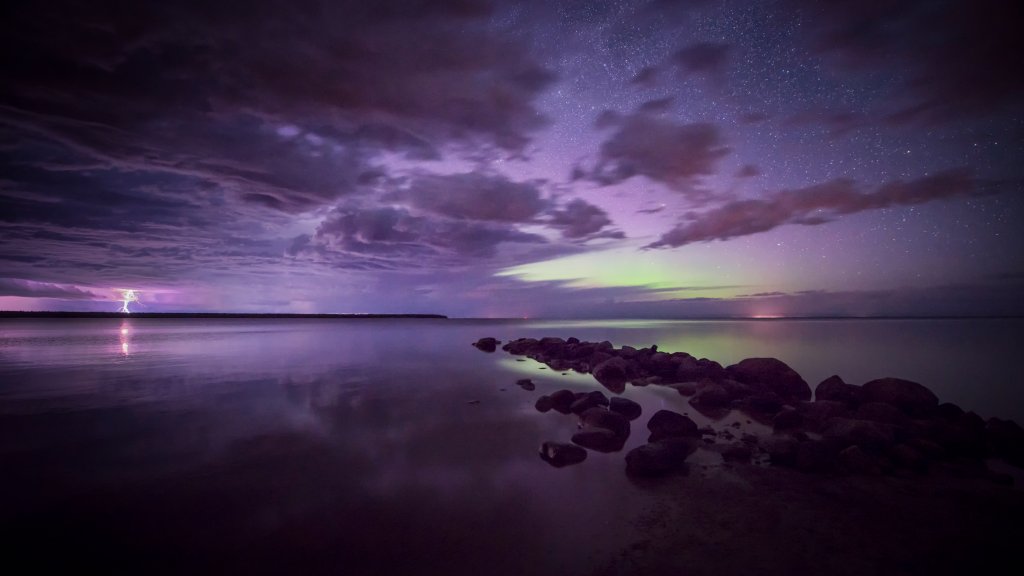
Aurora Dancing and Lightning Flashing, Lake Winnipeg, Canada
Sign in to add this photo to your favorites and desktop wallpaper rotation.
Lake Winnipeg is one of the largest freshwater lakes in North America, located in the province of Manitoba, Canada. It is the sixth-largest freshwater lake in Canada and the eleventh-largest in the world by surface area, covering approximately 24,514 square kilometers (9,465 square miles). The lake is relatively shallow, with an average depth of about 12 meters (39 feet), which contributes to its unique ecological characteristics. Lake Winnipeg is fed by several major rivers, including the Winnipeg River, the Red River, and the Saskatchewan River. It drains northward into the Nelson River and eventually into Hudson Bay. The lake plays a significant role in the local ecosystem and economy, supporting a diverse range of wildlife and providing resources for fishing, recreation, and tourism. The lake's basin is home to a variety of fish species, such as walleye, northern pike, and lake whitefish, making it a popular destination for commercial and recreational fishing. However, Lake Winnipeg faces environmental challenges, including pollution from agricultural runoff, urban development, and invasive species. These issues have led to concerns about water quality and the health of the lake's ecosystem. Efforts are ongoing to address these challenges through conservation initiatives and sustainable management practices. Lake Winnipeg is also culturally significant, with Indigenous communities having lived in the region for thousands of years, relying on the lake for sustenance and cultural practices.